

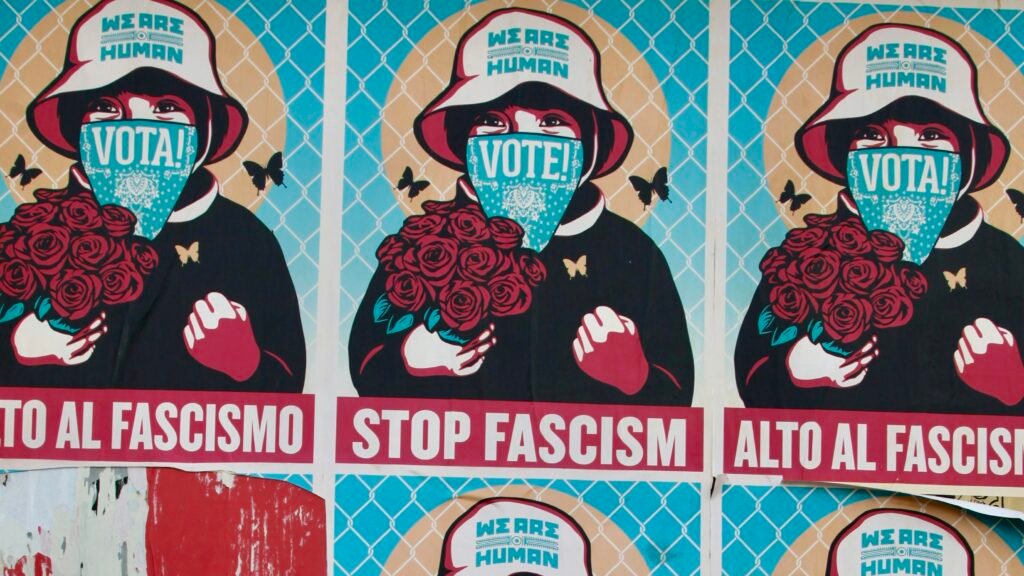
Nothing quite reveals people’s bias or ignorance like calling people a name they can’t define. Case in point: fascist.
So, let’s detail what a fascist is, simplifying the definition from Merriam-Webster:
A fascist is an adherent of a populist political movement that exalts nation and often race above the individual, that is associated with a centralized, autocratic government headed by a dictatorial leader, and that is characterized by severe economic and social regimentation and forcible suppression of opposition.
Let’s take this definition phrase by phrase, so we can make sure we know how to rightly apply this definition to those we suspect of being fascists.
…an adherent of a populist political movement that exalts nation and often race above the individual…
What this means is that we cannot call people fascist if they welcome racial diversity while being champions of personal responsibility.
…associated with a centralized autocratic government headed by a dictatorial leader…
Therefore, we cannot label someone a fascist if they actively support representative government and free speech, and who encourages participation in the democratic process through free and legal elections.
…characterized by severe economic and social regimentation…
Meaning, it’s hard to identify a fascist as someone who favors endeavors like capitalism, free enterprise, and deregulation.
…and forcible suppression of opposition
Because of this, it would be disingenuous to identify as fascists those people and groups who are open to dialogue and debate, willing to engage opposing ideas, and have their own ideas cross-examined. Fascists don’t give the opposition an open microphone and a chance to share their thoughts while openly critiquing counterarguments.
To close, fascist is a powerful word that we cannot allow to be watered down and simply used to denigrate and dismiss those we dislike or who hold beliefs we think are dangerous.
This is a word with a dark history, so we must make sure we use it in the right light.